When patients walk through the doors of a healthcare facility, they arrive with an implicit trust that the environment is safe, sterile, and fully conducive to their healing process. Unlike standard corporate offices, retail spaces, or industrial warehouses, healthcare environments present unique, high stakes challenges that demand absolute precision. A simple aesthetic cleaning routine is entirely insufficient when patient health is actively on the line. The undeniable reality is that harmful pathogens, dangerous bacteria, and resilient viruses can survive on hard surfaces for days or even weeks if they are not properly eradicated by trained professionals.
Therefore, implementing a rigorous medical office cleaning routine is not just a matter of visual presentation. It is a critical component of daily patient care, facility wide infection control, and overall business risk management. Facility managers, head nurses, and healthcare administrators carry the heavy burden of ensuring that every square inch of their clinic meets strict regulatory standards on a daily basis.
The High Stakes of Healthcare Cleaning and Infection Control
To truly understand the necessity of a specialized daily checklist, we must first examine the foundational principles of infection control within clinical settings. The primary goal of any healthcare sanitation program is the strict prevention of Healthcare Associated Infections, commonly known in the industry as HAIs. These are specific infections that patients acquire while receiving treatment for other unrelated medical conditions within a healthcare facility. HAIs remain a significant threat to global public health and can easily lead to severe medical complications, vastly extended patient recovery times, and substantial financial liabilities for the medical practice involved.
Compliance with the rigid guidelines established by overarching organizations such as the Centers for Disease Control and Prevention and the Occupational Safety and Health Administration is mandatory. These governing bodies dictate specific, unwavering protocols for handling biohazardous materials, managing exposure to bloodborne pathogens, and utilizing the correct personal protective equipment.
Furthermore, clinical cleaning requires a deep, scientific understanding of chemical efficacy, specifically the crucial concept known as “dwell time.” Dwell time refers to the specific, uninterrupted duration that a chemical disinfectant must remain visibly wet on a given surface to successfully destroy targeted microscopic pathogens. If a cleaning technician simply sprays a surface and immediately wipes it dry to save time, the chemical compound does not have sufficient time to act, rendering the entire cleaning process completely ineffective. A professional approach guarantees that staff members are extensively trained on these chemical properties, ensuring that every single product is used exactly according to the specifications provided by the chemical manufacturer.
Best Practices for Cleaning Supplies and Equipment
Before diving into the specific physical zones of your clinic, it is vital to establish strict operational protocols for the tools, liquids, and equipment used during the daily sanitation process. The equipment itself can easily become a dangerous vector for disease if it is not managed correctly by the cleaning staff.
One of the most critical methodologies in modern clinical sanitation is the implementation of a strict, color coded microfiber cleaning system. This proven system involves assigning specific, unmistakable colors of microfiber cloths and mop heads to distinct operational areas of the healthcare facility. For example, red microfiber cloths might be exclusively reserved for high risk restroom areas like toilets and urinals. Meanwhile, blue cloths are dedicated to general glass and mirror cleaning, and green cloths are used strictly and only in patient examination rooms. This visual segregation method forcibly prevents a cloth used in a public restroom from ever accidentally touching a sterile examination table, effectively eliminating a major, common source of dangerous cross contamination.
Additionally, the heavy machinery used to clean facility floors and purify the air must meet specialized commercial standards. Commercial vacuum cleaners must be equipped with True HEPA filters. High Efficiency Particulate Air filters are uniquely capable of trapping microscopic airborne particles, including dangerous bacteria, viral spores, and fine dust, rather than simply exhausting them violently back into the waiting room air where patients are actively breathing. Furthermore, the selection of cleaning chemicals must be strictly limited to hospital grade, EPA registered commercial disinfectants. These specific chemical products are rigorously tested in laboratories and proven effective against a broad spectrum of highly resilient microorganisms, including stubborn MRSA, VRE, and various contagious respiratory viral strains.
The Reception and Waiting Area Checklist
The front reception area serves as the first point of physical contact for every single patient, visiting vendor, and staff member entering your facility every morning. It is also the specific location where symptomatic, sick patients congregate together for extended periods, making it a primary, high risk hotspot for the rapid transmission of airborne and surface bound illnesses. Maintaining a flawless, continuously sanitized waiting room is essential for both strict infection control and making a positive, comforting first impression on anxious patients.
- Disinfecting High Touch Surfaces: Cleaning technicians must meticulously wipe down all exterior and interior door handles, metal push plates, and window glass located near the main entrance. The primary check in counter, which sees constant physical interaction throughout the business day, requires frequent, scheduled disinfection using appropriate hospital grade chemicals.
- Sanitizing Patient Interaction Items: Small items that pass constantly between front desk staff and waiting patients, such as medical clipboards, reusable signing pens, and electronic check in touchscreen tablets, must be individually disinfected after every single use or at the very least thoroughly cleaned during the deep evening service routine.
- Seating Area Maintenance: Waiting room chairs, especially the hard armrests where patients push themselves up, are prime locations for massive bacterial transfer. Non porous chairs should be thoroughly wiped down with a strong disinfectant, while upholstered fabric furniture should be regularly vacuumed with HEPA equipment and periodically scheduled for deep cleaning using hot water extraction methods.
- Floor Care Procedures: Hard lobby floors should be gently swept using specialized dust control mops to actively prevent settled particles from becoming suddenly airborne, followed immediately by damp mopping with a specialized neutral disinfectant floor cleaner. Waiting room carpets require rigorous daily HEPA vacuuming and prompt, immediate attention to any accidental spills or biohazard stains.
- Trash and Magazine Receptacles: Public waste bins must be completely emptied daily, and the entire interior and exterior of the plastic bins must be disinfected before inserting a fresh plastic liner. It is also recommended by health professionals to completely remove shared reading materials, as paper magazines cannot be effectively disinfected and easily harbor transmissible germs for days.
Examination and Treatment Rooms Checklist
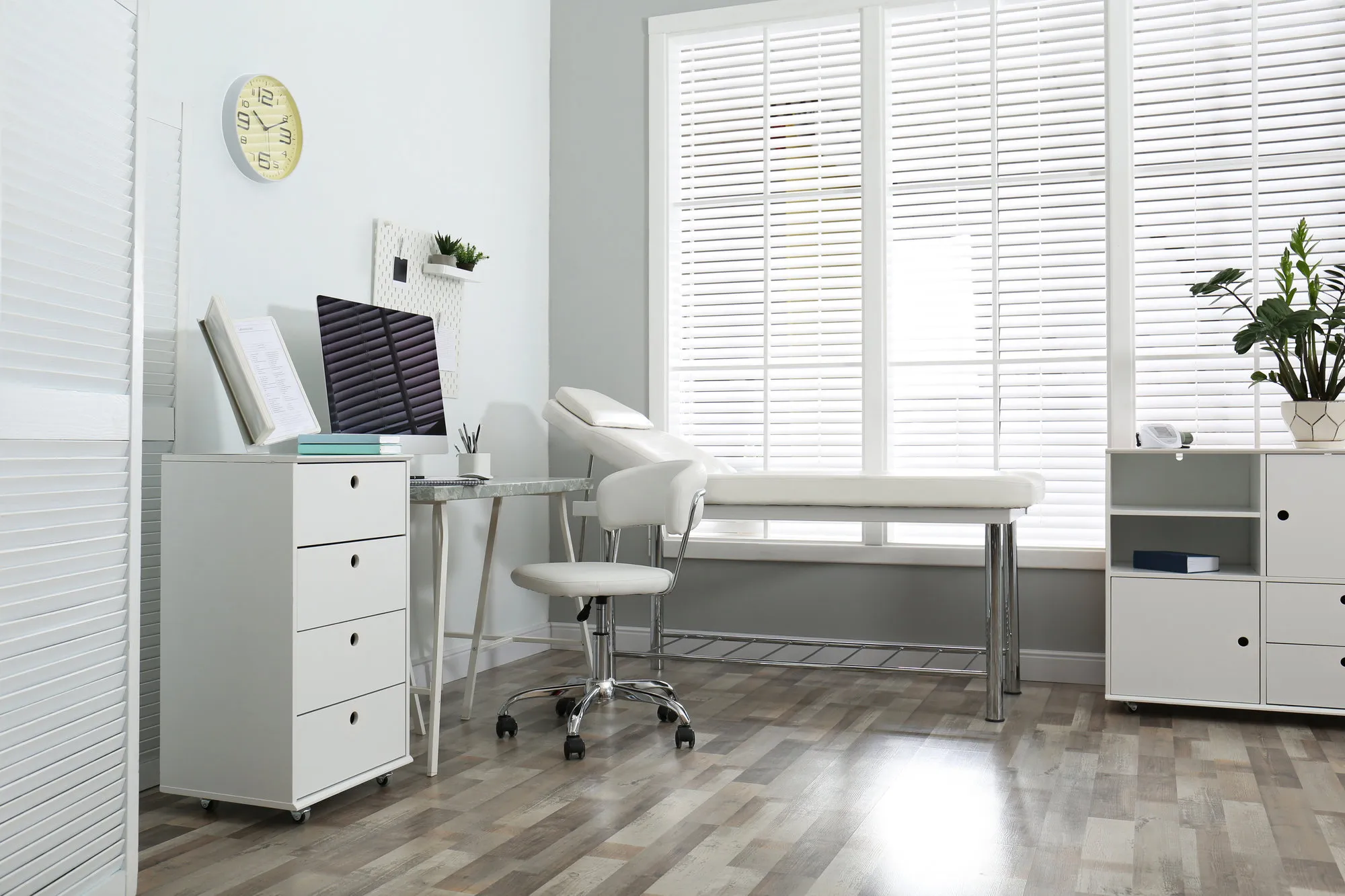
Patient examination rooms are the undeniable core operational areas of any medical practice or dental clinic. Because these enclosed rooms are exactly where direct, physical patient care occurs, they require the most stringent, uncompromising, and unforgiving cleaning protocols. The overall risk of sudden exposure to dangerous bodily fluids, blood, and invisible pathogens is significantly higher here than in any other part of the commercial building.
- Exam Table Processing: The large examination table is the central focal point of the clinical room. While clinical staff typically change the thin protective paper barrier between individual patients, the comprehensive evening janitorial cleaning must include a thorough, wet disinfection of the entire leather or vinyl table surface. This specifically includes the side edges, the hidden underside, and the metal mechanical adjustment levers, ensuring the proper chemical dwell time is strictly observed by the cleaning staff.
- Sink and Countertop Sanitization: Proper hand hygiene is the absolute first line of defense for doctors, specialists, and nurses. Therefore, the clinical sinks they use must be immaculately clean at all times. Faucet handles, soap dispenser push buttons, and paper towel dispenser levers must be targeted aggressively and repeatedly with EPA registered disinfectants. All surrounding medical countertops must be completely cleared of debris and wiped down completely.
- Medical Equipment and Electronics: While specialized, invasive medical instruments are always sterilized by trained nursing staff using autoclaves, the exterior environmental surfaces of larger medical equipment, desktop computer keyboards, and computer mice must be carefully disinfected by the commercial cleaning crew using specialized electronics safe antimicrobial wipes.
- Cabinetry and Door Hardware: Wooden cabinet handles, metal drawer pulls, and plastic light switches are touched constantly throughout the long clinical day by staff members whose hands may have been recently exposed to dangerous contaminants. These small micro surfaces are frequently overlooked by amateur cleaners but must be explicitly included in the daily professional checklist.
- Biohazard and Sharps Disposal: Commercial cleaning personnel must be expertly trained in the distinct, legal differences between regular municipal waste and regulated medical waste. They must never, under any circumstances, compress trash bags with their bare hands or bodies. Red sharps containers should be visually inspected daily, and if they are reaching the designated fill line, the cleaning staff should immediately notify the clinical management according to the facility’s specific communication protocols.
- Terminal Floor Cleaning: Hard floors in treatment areas should be meticulously mopped using a brand new, completely uncontaminated mop head for every specific clinical zone. The use of a commercial two bucket system, which cleverly separates clean disinfectant solution from dirty rinse water, is recommended to ensure the clinical floor is actually being chemically cleaned rather than just having dirty water spread thinly across it.
Restrooms and Employee Breakrooms Checklist
While public waiting rooms and clinical exam rooms naturally command the most daily attention from management, public restrooms and private employee breakrooms are critical operational hubs that require equal, if not greater, vigilance. In a strict clinical setting, an improperly cleaned public restroom can quickly undermine the hygiene standards of the entire medical building.
- Comprehensive Restroom Disinfection: Porcelain toilets and wall mounted urinals must be aggressively cleaned inside and out, paying special attention to the metal flush valves and the tile floor areas immediately surrounding the plumbing fixtures. Metal grab bars for disabled patients, plastic toilet paper dispensers, and the handles of the heavy exit doors must be disinfected multiple times daily. Sinks and glass mirrors must be left visually spotless and chemically sanitized. Additionally, metal floor drains should be routinely treated with appropriate commercial chemical enzymes to definitively eliminate odor causing bacteria and prevent unwanted pest infestations.
- Stocking and Supply Management: A crucial, non negotiable part of the daily restroom checklist is ensuring that all essential hygiene supplies, such as foaming antimicrobial hand soap, folded paper towels, and rolls of toilet tissue, are fully stocked. Empty dispensers heavily discourage proper hand hygiene among visiting patients and passing vendors.
- Breakroom Surface Sanitization: The physical health of your medical staff is just as important as the health of your visiting patients. If your nursing staff falls ill due to a contaminated employee breakroom, overall patient care will inevitably suffer. Breakroom dining tables, seating chairs, and food prep countertops must be wiped down thoroughly with disinfectants that are explicitly safe for use around food preparation areas.
- Appliance Maintenance: The large handles of the staff refrigerator, the tiny buttons on the shared microwave, and the handle of the communal coffee pot are massive, high risk touchpoints. These specific items must be disinfected daily. The interior of the microwave and refrigerator should also be subjected to a strictly scheduled deep cleaning to proactively prevent invisible mold growth and bacterial accumulation.
- Breakroom Sink and Floor Care: Just like heavily used clinical sinks, the employee breakroom sink harbors immense amounts of food borne bacteria. It must be heavily scrubbed and completely sanitized every evening. Breakroom floors require the exact same meticulous sweeping and mopping protocols applied to the rest of the medical facility.
Partnering with Specialists for Guaranteed Compliance
Maintaining the exhaustive standards meticulously outlined in this checklist requires significantly more than just a standard mop and a plastic bucket. It requires a dedicated, extensively trained workforce that truly understands the profound moral and legal responsibility they carry. Relying on standard corporate janitorial services or desperately attempting to manage these extensive daily duties in house often leads to critical lapses in regulatory compliance, drastically increasing the overall risk of facility wide disease outbreaks.
When searching for highly reliable partners, especially when looking for commercial cleaning Raileigh, regional facility managers must heavily prioritize established companies that specialize explicitly and exclusively in highly sensitive healthcare environments. General office cleaners simply do not possess the necessary, rigorous training regarding dangerous bloodborne pathogen standards, complex HIPAA privacy rules, or the precise, measured application of incredibly strong hospital grade chemicals.
The acceptable baseline standard for medical cleaning in Raleigh, NC is constantly evolving, requiring continuous staff education and highly rigorous internal quality assurance programs. You need a dedicated partner who actively conducts regular, unannounced audits of their own field teams to absolutely guarantee that every single item on the checklist is executed flawlessly every single night. By actively partnering with specialized, highly rated teams like Next Level Cleans, you definitively ensure that your facility is not just superficially visually appealing, but genuinely microscopically safe.